Othello, the Moor of Venice
William Shakespeare
During scene three of act three, Desdemona offers Othello a handkerchief to use that he had given her. He refuses to use it saying, "Your napkin is too little" (Shakespeare, Act III, iii, 288). After Othello refused the handkerchief, it dropped to the ground and Desdemona left forgetting to pick it up. This handkerchief is a symbol for Othello and Desdemona's love and trust for one another. By forgetting it on the ground, the couple forgets their trust in one another. Also, this shows that their love for one another may be unraveling. This handkerchief also reveals characteristics about Othello's heritage. Othello has maintained a mysterious persona in the play so far, but during this act readers learn more about his heritage when he explains the background of the handkerchief. Unfortunately, this romantic memento causes problems between the newly married couple later on in the act. Othello, suspecting Desdemona of infidelity, asks for the handkerchief, the symbol of their love. When Desdemona cannot immediately give it to him, he becomes irate and leaves furiously. At the end of the act, Cassio is seen giving the handkerchief to Bianca to copy. Replicating the embroidery of the handkerchief would be symbolic for duplicating Desdemona's love, which Othello would view as infidelity.
Showing posts with label Symbol. Show all posts
Showing posts with label Symbol. Show all posts
Wednesday, February 6, 2013

Tuesday, October 23, 2012
Crossing the Bar
"Crossing the Bar"
Alfred, Lord Tennyson
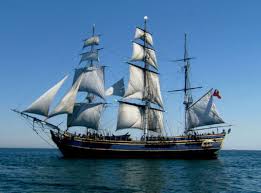 This poem seems to explore death through a metaphor comparing death to sailing. In this poem, the act of crossing the bar is the act of dying. The speaker wants people not to mourn his death. This desire is suggested in two places. "And may there be no moaning of the bar When I put out to sea," and "And may there be no sadness of farewell When I embark" ( Tennyson). The moaning of the bar could represent mourning over the speaker who died by going out to sea.
Another aspect of death represented in this poem is the afterlife. Although not described, the speaker mentions the idea of an afterlife by expressing his desire to meet his Pilot face to face. The Pilot symbolizes God or the Creator. For this divine reason, the word Pilot is capitalized. By expressing his desire to see his Pilot, the speaker alters the mood of the poem from the sadness of death to hope for an afterlife.
Alfred, Lord Tennyson
Another aspect of death represented in this poem is the afterlife. Although not described, the speaker mentions the idea of an afterlife by expressing his desire to meet his Pilot face to face. The Pilot symbolizes God or the Creator. For this divine reason, the word Pilot is capitalized. By expressing his desire to see his Pilot, the speaker alters the mood of the poem from the sadness of death to hope for an afterlife.
Wednesday, October 3, 2012
The Glass Menagerie: Post 4
The Glass Menagerie
Tennessee Williams
Throughout the play, Tom desperately desired adventure. After returning from the movies one night, Tom described a magician's ability to escape from a coffin that was nailed shut. This description could reflect how Tom felt trapped. Tom held a responsibility to his mother and to his sister. He provided financial support for his family. This responsibility restrained him from the adventure he desired. In search of adventure, Tom often went to the movies. "I go to the movies because - I like adventure. Adventure is something I don't have much of at work, so I go to the movies" (Williams, 1252). At the end of the play, Tom stated that he left his family and "followed,from then on, in my father's footsteps" (Williams, 1288). Despite his mother's wishes to prevent him from following the actions of his father, Tom abandoned his family in pursuit of adventure just like his father. Perhaps Tom wished to escape his life so badly because his mother tried too hard to restrain him.
The Glass Menagerie: Post 3
The Glass Menagerie
Tennessee Williams
Laura's glass menagerie is symbolic of her character. Laura is portrayed as a type of delicate wall flower. Unlike her mother, she is not popular, and she does not have callers visiting her. She appears to be unwanted. Her glass menagerie is similar to her in this way. The glass pieces only hold value in Laura's eyes and are not of popular demand by others. In addition,the glass unicorn represents special part of Laura. The unicorn is unique just like Laura. It is different from the other figurines just as Laura is different from other women. "Poor little fellow (the unicorn) must feel sort of lonesome" (Williams 1281). When the unicorn's horn broke, this could have symbolized Laura's heart breaking from the disappointment of her missed opportunity with Jim.
Thursday, September 20, 2012
The Joy of Cooking
The Joy of Cooking
Elaine Magarrell
Upon first reading this poem, I thought that the speaker was actually planning to cook her family's body parts. But then a thought occurred to me that the body parts could symbolize character traits of the speaker's siblings. The first stanza of the poem deals with cooking the sister's tongue. Because females are often accused of talking a lot and because the body part was a tongue, I would surmise that the speaker would like for his sister to stop talking as much as she does. "It(the tongue) probably will grow back"(Magarrell). In this quote, the speaker suggests that the sister talks a lot because her tongue would grow back out of necessity.
The second stanza talks about the brother's heart. Certain phrases suggest that the brother is unloving. The heart, symbolic of love, "is firm and rather dry" and it would "barely feed two" (Magarrell). This withered and small heart seems incapable of holding much love.
By picking specific body parts to cook from each sibling, the speaker suggests changes that she would like to see in their characters.
Thursday, September 13, 2012
Flowers
A Raisin in the Sun
Lorraine Hansberry
"Lord , if this little old plant don't get more sun than it's been getting it ain't never going to see spring again (Hansberry, 40). This small, seemingly insignificant, plant represents a much greater aspect of this play. The plant can be symbolic of the Younger family's dreams. Without sunlight and other nourishment, the plant would wither and die. Similarly, postponed dreams shrink out of one's thoughts, and eventually the dream can vanish altogether. This plant physically represented Mama's dream to own a garden of her own. Near the end of the play, Mama looked to secure her plant while the family packed to move. She planned to bring the plant with her to her new garden, and she did at the end when the family left the apartment. Mama's action of carrying the plant with her to the new house shows that one should always carry with him his dreams. Other events may occur in life, but they should not dissuade one from his dreams. Even though achieving one's dream may take many years, he should continue to nourish and work toward his dream. Keeping the dream allows one to add to the dream upon each successful measure to attain happiness.
Subscribe to:
Posts (Atom)