"The Convergence of the Twain"
Thomas Hardy
In this poem, Hardy uses vivid images to describe sunken lavish ship aka the Titanic. In his use of imagery, Hardy conveys the differences between the extravagant ship and the ocean. For example, "Jewels in joy designed/ To ravish the sensuous mind/ Lie
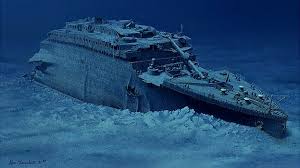
lightless, all their sparkles bleared and black and blind" (Hardy). This quote expresses the brilliance of the Titanic as it was before it sunk through "Jewels in joy designed" and "sparkles". These phrases sound appealing to the reader and evoke pictures of wealth. Hardy contrasts these images of wealth with the phrase "bleared and black and blind". This phrase expresses that the sea caused the demise of the vanity of the ship. In addition to this phrase, other phrases like "The sea-worm crawls- grotesque, slimed, dumb, indifferent"(Hardy) also help to show that such a proud, lavish ship did not belong in the ocean. By contrasting the different settings (sea vs. ship), Hardy suggests that such a massive object of vanity was not suitable to cross the ocean. Further, this same contrast in setting could be applied to express that human vanity will cause our demise. A lavish ship sunk in the middle of the ocean because its pride did not allow it to properly navigate around an iceberg. The ship's vanity blinded the people of its possibility to sink. Similarly, our own pride and vanity can blind us from our possibility of failing. By simplifying our lives, we can focus on the truly important tasks and can become successful people.
